This story is part of Billboard’s Global World Cup Series, a collection of 11 cover stories which pairs top soccer stars across the world competing in the 2026 FIFA World Cup with highly-touted musicians in accompanying countries.
This summer, the World Cup arrives bigger than it has ever been: 48 teams, three host nations, the first edition played across the United States, Canada and Mexico together. South Korea travels to it for the 11th time in a row — a streak that runs unbroken to 1986 and still carries the memory of 2002, when the team reached the semifinals as co-hosts. For a few weeks every four years, an entire nation keeps the same schedule, wears the same color and shouts the same three words at the same instant: “Oh Pilseung Korea.”
A World Cup is a scored event — walkout anthems, stadium singalongs, the chant that turns tens of thousands of strangers into a single voice. Football and pop have been two of Korea’s loudest exports of the century, each carrying the country’s name abroad. And underneath the noise, the two run on the same engine: long, invisible preparation spent on one public moment, judged the second it arrives.
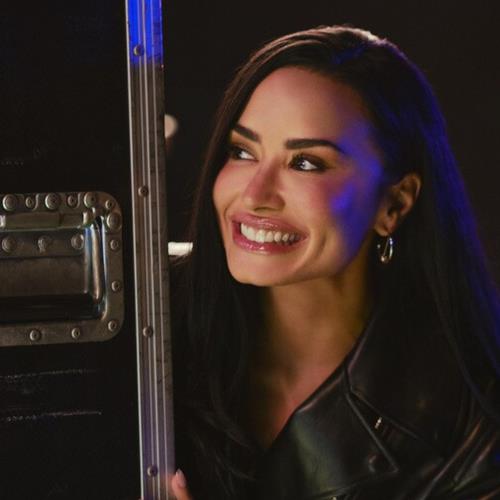
For its FIFA World Cup Edition, Billboard Korea puts two performers in one frame who rarely share it: singer Kwon Eunbi and footballer Heo Yong Joon. The surface logic is obvious — a stage, a pitch, two people who work in front of crowds. The more telling logic is timing: both arrive on the front edge of a new chapter.
Kwon spent the spring changing homes, leaving her label of eight years to sign with RBW, the house of MAMAMOO and ONEWE. She comes in as a soloist who has already shown she can will a song up the charts on her own terms — “Underwater,” the lead single from her 2022 EP Lethality, became a delayed hit roughly eight months after release, reignited by a 2023 Waterbomb set that made her a fixture on the summer festival circuit and earned the “Summer Queen” tag. Heo, the striker fans call “Heonaldo” for the Ronaldo-style celebration that trails his goals, has chased the next finish across nearly a decade in the K League — a 2016 debut at Jeonnam Dragons, a 2017 national-team call-up — and is now eyeing a move abroad.
One works to a beat, the other to a whistle. Both are betting the best of it is still ahead.
This edition brings music and sport into a single frame. How does it feel to be part of it?
Kwon Eunbi: I think music and sports are deeply alike in the way they bring people’s emotions together. The World Cup especially is such a special event — people all over the world cheering together in the same moment. It feels genuinely meaningful and exciting to be part of a project like this.
What does the World Cup bring back for you?
Kwon: For me, the World Cup brings back memories of the whole family gathering in front of the TV to cheer together. When I was little, I remember watching the matches with my family in a Red Devils T-shirt — and I can still vividly picture the way everyone erupted at once the moment Korea scored.
And for you — when did you first start dreaming of becoming a footballer?
Heo Yong Joon: I think I first started dreaming of becoming a footballer around the third grade. From then on, my goal was to play for the national team. The period when I felt I grew the most as a player was during my elementary school years, too. I met wonderful coaches when I was young and learned so much from them, and those experiences are the biggest reason I’ve been able to keep going as a player all this time. That’s why I believe the youth years are so important.
Fans also call you “Heonaldo.” Were there players you looked up to, or who shaped how you play?
Heo: I think the nickname “Heonaldo” came from my goal celebration. Of course, it would’ve been even better if it came from my playing style or skill. (Laughs.) I like Neymar of Brazil and Cristiano Ronaldo.
What do fans mean to you as a player?
Heo: I think fans are the greatest source of strength inside a stadium. When I hear the roar of the crowd and their voices cheering me on, it really gives me so much power on the field. I turned pro in 2016, and there are fans who’ve supported me without fail ever since. Just knowing they’ve stayed by me so steadily, for so long, makes me truly grateful.
Heo Yong Joon
Kim Tae Hwan
And on stage — when did you feel that love most strongly?
Kwon: I think I felt it most at summer festivals and college events. It made me so happy when the audience sang along to my songs and threw themselves into the performance from start to finish. In moments like that, it really hits me: “Wow, I’m truly being given so much love.”
Stepping out as a soloist means carrying the whole stage on your own. What changed most for you?
Kwon: I think the biggest difference is the sense of responsibility. In a group, there were so many moments when we could lean on one another. Onstage, just catching a member’s eye gave me strength, and we could share our energy back and forth. As a solo artist, I have to carry the stage on my own, so at first there was real pressure. But because of that, I think I’ve been able to express my own voice and emotions more deeply.
On the field you read as full of confidence. What do you see as your greatest strength?
Heo: I love the phrase “always with confidence,” and I think that naturally comes through on the field. At the same time, I always remind myself not to let confidence tip over into arrogance.
A single play can change a match. How do you handle the pressure of those moments?
Heo: I once read an interview with a player who said you should enjoy the pressure and the tension, and I remember relating to that so strongly. So I try to enjoy those situations as much as I can, too. It isn’t easy, of course, but I keep working toward that mindset.
Watching footballers, what do you respect most?
Kwon: I think it’s amazing how they hold their focus right to the end under that kind of intense pressure. When I’m onstage, there are moments when my concentration wavers for a second, and each time I have to work to pull it back. But footballers are out there for a long stretch, and it must be so physically demanding — so for them to sustain that focus is genuinely impressive. Especially in the big matches, I really sense how much mental strength must matter.
Do you play any sports yourself?
Kwon: I usually enjoy exercises that work on balance, like Pilates or running. I’ve been performing on stage for a long time, so taking care of my stamina is really important. I also keep up activities like hiking and weight training to build my strength.
And your own routine for staying in condition?
Kwon: I put the most importance on sleep and meals. No matter how busy I get, I try to keep my sleep rhythm as steady as I can, and I think eating well is really important too. When things get hectic it’s easy to skip meals, so whenever I can, I make a point of eating properly.
Up close, what do you think the two fields share?
Kwon: I really do think there’s a lot in common. A performance or a match itself is over in a brief moment, but you practice and prepare for such a long time for it. That part feels very similar to me. And the audience or the fans feel the emotion of that moment directly — so in the end, I think music and sports share a similar power to move people’s hearts.

Kwon Eunbi
Kim Tae Hwan
From your side, what impresses you most about musicians?
Heo: I think the patience it takes to carry a fleeting spark of inspiration all the way through to a finished piece is incredible. We only ever hear the completed song — maybe three minutes long — but behind it are countless revisions, recordings and long hours of creation. That doggedness it takes to turn an abstract melody in your head into real music is something I find truly impressive.
And what do you think the power of music is?
Kwon: I think the greatest power of music is that it can carry emotion even when people don’t share a language. A song can bring you comfort without your trying, or fill you with energy instead. That’s something special that only music can do.
What are you listening to before a match?
Heo: I really love listening to music in general. I tend to listen to a lot of ballads and hip-hop — I think I play a lot of Ash Island and Kid Wine. For ballads, I lean toward older songs.
And your routine to get into game mode?
Heo: Before a match I always do visualization. I also make sure to hydrate and stretch, and I try to listen to upbeat music to loosen up my body and lift my mood a little.
What about you, before you go onstage?
Kwon: Usually I listen to my own songs the most. I use that time to rehearse and picture the kind of stage I want to put on, so I tend to play through the setlist. After that, the music I reach for shifts a little depending on the mood of the day.
If you could pick just one song as your stadium entrance music?
Kwon: From my own songs, I’d pick “Underwater.” It has this quality that takes over the room from the very first note, with an energy that gradually pulls you in — so I think it would work well as entrance music in a stadium.
And which of your own songs would best suit a World Cup stadium?
Kwon: I think “Hello Stranger” would fit well. The song has such intense energy and momentum that I think it would match the fever-pitch atmosphere of a stadium.
Behind the highlights are long hours of repetition. What keeps you going through them?
Heo: I think the biggest thing is not wanting to let down the fans who come out to the stadium. They spend their time and money to come watch us, so I always find myself working to show them a better version of myself. I also push through and overcome the hard moments for my own growth as a player. In the end, I believe all sports exist because of the fans, and that’s one of my greatest sources of motivation.
And what does it mean to take the field for your country?
Heo: Taking the field for your country comes with enormous pride and responsibility. There’s pressure, of course, but I think you have to play with a pride that’s even greater than that. So many people are cheering for us, and I draw a lot of strength from that. I always try to give my all with the mindset that I’m playing for the team and the country, not just for myself — and after that, I try to leave the result up to fate.
What are you focused on next?
Kwon: I always want to show people something new, so I’m constantly mulling over different musical directions to try. I can’t go into detail yet, but I’m hard at work on new projects I think my fans will love.
What do you hope fans take from this edition?
Kwon: Just like the passion and excitement the World Cup brings, I hope this photo shoot and interview carry that same positive, high-energy feeling to everyone.