What makes a song, a singer, a piece of music gay? For famed critic Barry Walters, who built a career on reviews for The Village Voice, Rolling Stone, The Advocate, and the San Francisco Examiner, exploring the history of LGBTQ+ music is inherently complicated by the queer community’s long standing fight for acceptance in culture.
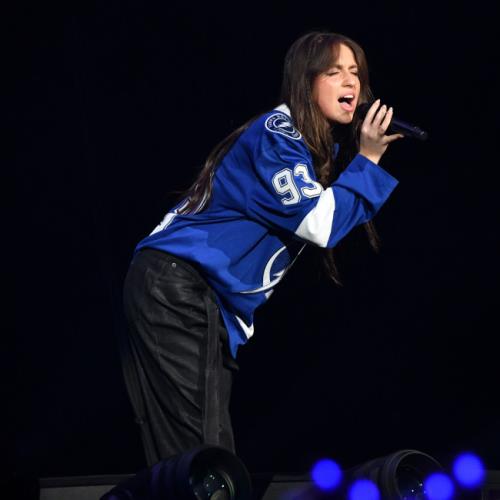
Sure, Chappell Roan’s “Pink Pony Club” is a platinum-certified track celebrating the glittery, alcohol-fueled streets of Los Angeles’ gay neighborhood WeHo, but some of the biggest gay songs in music history have earned that designation from fans reading between the lines or finding the true meaning behind visual cues and outrageous personas. In his new book Mighty Real: A History of LGBTQ Music, 1969–2000 (out Tuesday), Walters uses over 40 years of his own professional research, music knowledge, and insider information to tell an honest history of the biggest LGBTQ+ songs and artists of the 20th century.
“My aim has been to demonstrate how we, as a coalition, make sense of the sometimes initially underground but often ultimately mainstream culture we built as artists and listeners despite often overwhelming opposition,” he writes in the book’s preface. “Moreover, I’ve attempted to capture the community these nurturing songs give us—especially when we think we’re most alone.”
In this exclusive excerpt, Walters explores how the Village People‘s legacy of queer classics is complicated by the political belief’s of group’s sole remaining member.
Our prodigious disco proxy, Donna Summer, had many LGBTQ peers who crashed the mainstream. Disco Tex & the Sex-O-Lettes—a studio group fronted by celebrity hairdresser Monti Rock III—released, in 1974, what remains a contender for the campiest record ever to hit the pop Top Ten, “Get Dancin’.” It’s sung by producer Bob Crewe, co-writer Kenny Nolan, and singer Cidny Bullens, who then, decades before his transition, was known as Cindy. They sing the entire song between Rock’s rants, which reprise his conspicuously queeny TV talk show appearances. “My chiffon is wet, darling,” he quips like Liberace with the gayness knob set to eleven.
Alicia Bridges’ international 1978 hit “I Love the Nightlife (Disco ’Round)” (1978) offers subtler commentary that also comes from a queer place. Top gay DJ Jim Burgess maximized its dancefloor potential in a twelve-inch mix so mellow you might not notice that the song is written from the outlook of a neglected woman struggling to leave her womanizing husband. Like so many lesbians then stuck in straight relationships, the song’s protagonist longs for liberation—“ack-shon,” Bridges memorably sings. Bridges came out following her 1984 album Hocus Pocus, on Olivia Records’ Second Wave subsidiary, and “Nightlife” enjoyed another round of popularity following its appearance in The Adventures of Priscilla, Queen of the Desert, 1994’s hit road comedy in which two drag queens and a trans woman parade a myriad of fabulous, Oscar-winning outfits across the Australian outback.
After leaving the Edgar Winter Group, with whom he played bass, wrote, and sang the band’s 1973 hit “Free Ride,” Dan Hartman became the rocker who made the most full-on disco transition; being gay, he knew how to do that properly. Following 1978’s zippy, gold-certified “Instant Replay,” he released a ten-minute track so consummate it culminates the entire genre.
Building through multiple tension-building vamps, 1979’s “Vertigo/Relight My Fire” plateaus for a whole-souled love song in which Hartman calls on his wayward lover to help him rebuild their faltering relationship. Yet, embedded within this narrative is a profound search for queer sanctuary and transcendence. The singer asks not only his partner but also his listeners to “stand up in the name of love” and make the world more like our dreams. Via one of popular music’s most stratospherically elevating climaxes, the song shifts into gospel overdrive with the explosive entrance of disco’s mightiest, most visceral vocalist, Loleatta Holloway. “You gotta be strong enough to walk on through the night!” she implores. LGBTQ and Black audiences know about our overlapping adversities. Holloway, Hartman, the background singers, and the orchestration interlock so heartily that the affirmation searched for at the song’s start arrives.
In 1993, a cover of “Relight My Fire” by British boyband Take That and Scotland’s Lulu went Number One in the UK. Soon after, Hartman died of a brain tumor at a time when AIDS patients, of which he was one, often did. He never came out. Yet, “Relight My Fire” lives on as a dancefloor evergreen guaranteed to take our tribe to disco’s higher plane.
Paul Jabara led multiple lives that converged in gay disco. Appearing in Hair, Jesus Christ Superstar, and The Rocky Horror Show, he brought musical theatre opulence to solo material peppered with LGBTQ references.
Queer listeners recognize that he sings “she” throughout 1978’s “Disco Queen” — from Thank God It’s Friday, the dancefloor comedy in which he also acts — to represent one of us. “Where’d she get her energy?” Jabara squeaks, rhetorically. He knows the answer is speed; that’s how his “first lady of the floor” summons the stamina to reign from L.A. to Fire Island. On the twelve-inch single of “Disco Wedding/Honeymoon (In Puerto Rico),” he’s dressed as both bride and groom.
Co-writer of Donna Summer’s “Last Dance” and “No More Tears (Enough Is Enough),” as well as Barbra Streisand’s own 1979 disco hit, “The Main Event/Fight,” Jabara brought this irreverence to a song so jocose no star would touch it. In 1979, he and future Late Show bandleader Paul Shaffer wrote “It’s Raining Men” for Summer, but the recently born-again singer found it blasphemous and sent Jabara a Bible in response. Further rejections came from
Streisand, Cher, and Diana Ross. Jabara finally wore down the resistance of Two Tons o’ Fun’s Martha Wash and Izora Armstead. Renamed the Weather Girls for the 1982 single release, Wash and Armstead, the latter then known as Redman, fully commit to a fella-celebrating song so exuberant it’s simultaneously comical and uplifting. Naturally, it became an instant gay anthem, as well as an international sleeper hit. Buoyed by a low-budget but high-camp video featuring miniaturized monster-movie sets, Busby Berkeley–style choreography, and musclebound dancers in Speedos and raincoats, “It’s Raining Men” brings a torrent of gayness—the kind that also speaks to straight women. “Rip off the roof and stay in bed!” howl the Girls over co-producer Bob Esty’s instrumental thunder. It’s Homer Simpson’s favorite song.
Morocco-born Frenchman Jacques Morali became disco’s most successful and least apologetic Svengali by making music inspired by us. “Morali was openly gay and he had no shyness about it,” said his business partner Henri Belolo. “His dream was to bring some of the gay life to the mainstream.” In 1975, Morali convinced Belolo to underwrite his Philly-recorded studio project, the Ritchie Family, but only after its “Brazil” became a hit did Morali assemble a girl group to promote it. Enthralled by Felipe Rose, a go-go boy decked out in Native American regalia at the Anvil, a notorious gay Manhattan disco, Morali applied that approach to his next conceptual act, Village People. “I wanted to do something only for the gay market,” Morali admitted to Rolling Stone in 1978.
Like the Ritchie Family’s music, 1977’s Village People was recorded by session musicians, in this case joined by lead singer Victor Willis, with Rose on bells. Its four songs are all paeans to LGBTQ communities — “San Francisco (You’ve Got Me),” “In Hollywood (Everybody Is a Star),” “Fire Island,” and “Village People.” The first and biggest one is a riot of queer-male semiotics that cites the gayest streets, apparel, transportation modes, and music of a city “known for its freedom.” Just as “every gesture there has a meaning,” nearly every line sends out a semaphore signal for LGBTQ listeners to decipher. The album topped Billboard’s disco chart for seven weeks and eventually went gold—a major achievement given its minimal radio exposure. Again, Casablanca Records captivated disco’s core audience.
For the LP sleeve and promotion of 1978’s Macho Man, other members were assembled, and soon each of the six took on a costume-based persona derived from the blue-collar archetypes made gay in Greenwich Village — Rose the “Indian,” Willis the cop, Alex Briley the G.I., David Hodo the construction worker, Glenn Hughes the biker, and Randy Jones the Marlboro Manly cowboy. Once more, the lyrics scream “gay” without using the word, particularly on “I Am What I Am,” a rousing pride anthem. “To love is not a sin/I did not choose the way I am!” Willis, who is heterosexual, bawls much like Carl Bean. But the title track — the act’s long-lasting pop breakthrough — sends conflicting signals. Straight people can hear it as a straightforward glorification of machismo, whereas gay men know it honors their own performative masculinity — a butch outfit and studly stance to attract sexual attention from other guys. The resulting gold single and platinum album gave the group a mainstream platform that Bean’s “I Was Born This Way”—which came out two months earlier—couldn’t reach. Still in the suburbs and too young for discos, I lacked access to Bean. But, like other LGBTQ teens, I had the Peeps.
When Willis took over as lyricist for 1978’s Cruisin’ and 1979’s Go West, the group’s messaging became less lucidly gay. But the concepts themselves, still Morali-driven, nevertheless broadcast brazen queerness, particularly on pop’s gay Rorschach test, “Y.M.C.A.” As all-American as circumcision, the Young Men’s Christian Association remains a harbor for jocks of every stripe, much like this single, which at twelve million international sales, belongs to everybody. The evidence is its ongoing presence at sporting events, bar mitzvahs, wedding receptions, and even conservative rallies. The fact that, over forty years later, listeners are still debating its implicit yet nearly dogmatic gay meaning proves how deeply coded mainstream-targeted LGBTQ culture had to be back then, and how resistant some straight folk, even today, can be when it comes to seeing the world from any perspective beyond their own.
According to Jones, Village People’s classic cowboy, the song was inspired by his own experience at a particular YMCA. “I had a lot of friends I worked out with who were in the adult film industry,” said Jones, then a member of the McBurney Y, where he brought his producer. “[Morali] was impressed by meeting people he had seen in the videos and magazines. Those visits with me planted a seed in him, and that’s how he got the idea for “Y.M.C.A.” — by literally going to the YMCA.”
Located in Manhattan’s gay-intensive Chelsea neighborhood, the McBurney Y then doubled as residential hotel, and its proximity to the Village—and therefore many of New York’s gay discos, bars, and bathhouses—meant many gay and bi men from the surrounding area rented its cheap rooms for weekend crash pads and hookups. Because Morali, a foreigner, experienced the gayest YMCA in the universe, the Y represented American LGBTQ liberation to him. “You can hang out with all the boys,” Willis wails between the pow-pow-pow-pow of horny horns that simulate the militaristic marches of John Philip Sousa. Like the group’s earlier city-themed songs, “Y.M.C.A.” offers queer sanctuary from inhibition.
It doesn’t matter that Willis is straight. It doesn’t matter that the song lacks any mention of man-on-man sex, an impossibility for a 1978 smash. “Y.M.C.A.” glorifies self-actualization within an all-male context. “Young man, you can make real your dreams,” it promises. In Village People’s gay-empowerment lexicon this means joining a gay community, for true abolition from the slavery of societal/self-loathing cannot be achieved on one’s own. So blatantly commercial it sounds like a jingle, “Y.M.C.A” is nothing less than a Broadway-scaled advertisement for LGBTQ life and love. Filmed outside the McBurney Y, the Christopher Street Pier (then throbbing with alfresco gay sex), and its nearby Ramrod leather bar (future site of an antigay massacre), its video looks and feels like a recruitment ad. Don’t be depressed, the song tells us. Lift yourself up and find others just like you.
Soon after, my gay best friend from high school stayed at the McBurney Y while apartment searching. One night, we went out clubbing, and rather than going back to my dorm, I slept on his closet-sized floor. The next morning, he snuck me into the showers, where geezers ogled me like the “chicken” I was. With “Y.M.C.A.” stuck in my head, I felt I’d stepped into the seedy reality behind the song’s splendiferous fantasy. Years later, I got my own membership at San Francisco’s Embarcadero Y, where I was caught trying to make my dreams real with another steam room gent. We were both shown the door.
By 1979, Morali had spread himself too thin with other acts, like his boyfriend Dennis Parker, aka porn star Wade Nichols. Nevertheless, Grease’s super-gay co-producer Allan Carr decided Morali’s very gay story of masterminding the mostly gay Village People would provide a fitting narrative for what he intended to be Hollywood’s first overtly gay musical. Grease’s gay screenwriter, Bronté Woodard, scripted a movie that would inexplicably star Steve Guttenberg as “Jack Morell,” Valerie Perrine as Morell’s supermodel roommate, and Olympic gold medalist Caitlyn Jenner (decades before she transitioned) as a Wall Street lawyer who champions the group. In the spring of 1979, Carr’s also-inexplicable choice as director, sitcom actor Nancy Walker, started filming what was originally titled Discoland . . . Where the Music Never Ends without Willis, who’d left the group.
Released in June 1980, Carr’s retitled Can’t Stop the Music ended up being one of the most entertainingly horrendous movies of all time. Shafting LGBTQ authenticity in favor of straight showbiz corn, it presents every major character as goofily hetero, while the Village People recede into the background of their own movie despite lavishly bumbling dance numbers, such as “Milkshake,” which was actually funded with two million dollars from what’s now known as the American Dairy Science Association. Only their showstopping “Y.M.C.A.” dance sequence, featuring two hundred fifty West Hollywood–style male gymnasts, exudes the glorious gayness otherwise withheld. Bombing everywhere but Australia, Japan, and Bali, Can’t Stop the Music lost eighteen million dollars.
Village People have continued to depreciate their queer legacy so often that President Donald Trump —whose first administration appointed antigay judges, opposed the Equality Act, gutted or blocked LGBTQ protections, and tried to stop trans people from serving in the military — vacated the White House he claimed was still his to the tune of “Y.M.C.A” When he returned in 2025 to do much worse, Willis’s reconstituted Peeps performed it at his victory party. Morali couldn’t comment, much less stop this disco sacrilege; he died of AIDS in 1991.
From MIGHTY REAL by Barry Walters, published on May 12th by Viking, an imprint of Penguin Publishing Group, a division of Penguin Random House, LLC. Copyright © 2026 by Barry Walters.